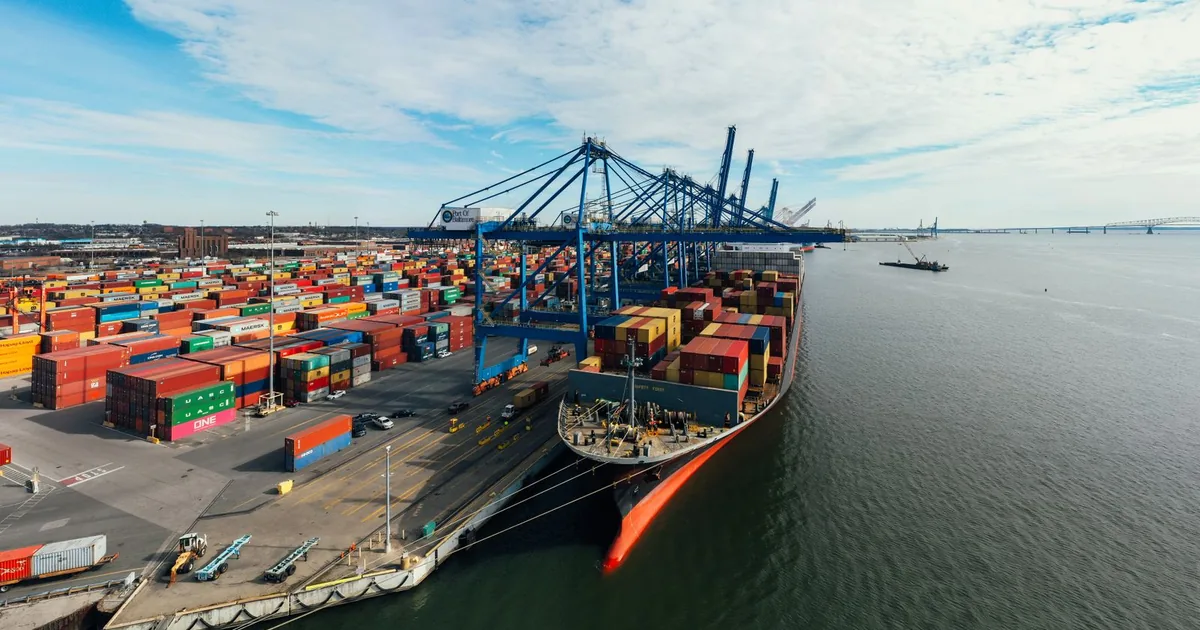
A Pickering, Ontario business owner is staring down a $183,000 surtax bill on 330 electric golf trolleys imported from China. Not electric vehicles. Golf trolleys. The kind you push your bag around the course with, except these ones have a motor. CBC News broke the story, and it's been circulating through the trade community ever since, because it's exactly the kind of thing that keeps importers up at night.
The Canadian government's retaliatory EV surtax was aimed at Chinese-made passenger vehicles. Nobody buying golf trolleys thought they were in scope. They were wrong, and the bill proves it.
If you import anything from China that has an electric motor, a lithium battery, or moves under its own power, you need to read this carefully. The surtax net is wider than the name suggests, and CBSA is not in the business of giving refunds because you didn't know.
What Actually Happened in Pickering
The importer brought in 330 electric golf trolleys from China. Straightforward enough. These are battery-powered carts that carry golf bags around a course. They're not cars. They're not buses. They're not anything most people would call an "electric vehicle" in the policy sense.
But Canada's surtax on Chinese EVs doesn't just cover passenger vehicles. The orders are written around tariff classifications, and if your product lands in the wrong heading or subheading, you're caught. That's what happened here. The trolleys were classified under a tariff item that fell within the surtax scope, and the importer got hit with a 100% surtax on top of regular duties.
On 330 units, that math gets brutal fast. $183,000 is the kind of number that ends small businesses.
Yahoo Finance Canada reported the owner had no idea this was coming. That's the part that should concern you. This wasn't a case of someone trying to skirt the rules. It was a classification problem that nobody caught before the goods crossed the border.
How Canada's EV Surtax Actually Works
Canada announced surtaxes on Chinese-made electric vehicles in the fall of 2024, following similar moves by the United States and the European Union. The stated goal was protecting domestic manufacturing from subsidized Chinese competition.
The surtax is applied through Orders in Council, and the scope is defined by tariff classifications, not by what the product is called in plain English. That distinction matters enormously.
CBSA Customs Notice 26-23, which covers the United States Surtax Order (2026), gives you a sense of how these orders are structured. The product scope is tied to specific tariff items. If your goods fall under one of those items, the surtax applies. Full stop. The name on your invoice, what your supplier calls the product, what you call it in your catalog, none of that matters to CBSA at the border.
The 100% surtax on Chinese EVs is the headline number, but there are also 25% surtaxes on other Chinese goods that have been layered on through separate orders. Depending on what you're importing, you could be looking at stacked duties that turn a profitable shipment into a loss.
The Tariff Item That Changed Everything: 8507.60.20
Here's where it gets technical, but stay with me because this is the part that directly affects whether you get a surprise bill.
Tariff item 8507.60.20 covers lithium-ion batteries. CBSA issued Customs Notice 26-21 specifically about amendments to the description of this tariff item. The notice deals with a description change in the Departmental Consolidation of the Customs Tariff.
Why does that matter? Because electric golf trolleys, electric scooters, e-bikes, electric forklifts, and a whole range of other products that nobody thinks of as "EVs" contain lithium-ion batteries or electric drive systems. Depending on how your product is classified, it might land under a heading or subheading that's caught by the surtax orders.
The golf trolley case almost certainly involved a classification question about whether the product was classified as a vehicle (Chapter 87), a battery-powered appliance, or something else. Chapter 87 covers vehicles, and several subheadings there are explicitly in scope for the EV surtax. If your trolley gets classified as a vehicle rather than, say, a motorized appliance, you're in a different duty universe entirely.
You can check the current description and duty rates for tariff heading 8507 (electric accumulators, including separators) directly to see how lithium-ion battery classifications break down under the current tariff schedule.
Which Products Are Actually at Risk
The golf trolley case is dramatic, but it's not unique. There's a whole category of products from China that sit in a grey zone where the EV surtax could apply, and most importers haven't thought to check.
Think about anything with an electric motor or battery pack that moves people or goods:
- Electric golf trolleys and golf carts
- Electric scooters and e-bikes
- Electric wheelchairs and mobility devices
- Electric forklifts and warehouse equipment
- Electric ATVs and utility vehicles
- Electric go-karts
- Electric ride-on toys (yes, the ones for kids)
- Electric cleaning machines and floor scrubbers
- Electric cargo bikes
- Electric boats and marine motors
Some of these are clearly in scope. Some are clearly not. A lot of them are in the middle, and that's where the risk lives.
We had a client importing electric warehouse pallet movers from China earlier this year. They assumed the EV surtax was a passenger vehicle thing. It took us a couple of hours of classification work to confirm their specific product wasn't caught, but it was closer than they expected. If they'd classified it differently, they'd have had a problem.
The Classification Trap: Why This Keeps Happening
Customs classification is not intuitive. The Harmonized System was designed by committee, and it shows. A product that looks like one thing to you might be classified as something completely different under the tariff schedule.
The golf trolley situation is a perfect example. You look at a golf trolley and you see a golf accessory. The tariff schedule might see a self-propelled vehicle. That one interpretation difference is worth $183,000 in this case.
A few things make this worse right now:
First, the surtax orders were written quickly in response to a fast-moving trade policy situation. The language in the orders doesn't always map cleanly onto the tariff schedule in the way you'd hope.
Second, suppliers in China often don't understand Canadian tariff classification. They'll put an HS code on a commercial invoice that works fine for Chinese export purposes but is wrong for Canadian import purposes. Importers take that code at face value, and brokers sometimes do too if they're not paying close attention.
Third, product descriptions on invoices are often vague or translated badly. "Electric mobility device" could be a wheelchair or a scooter. The classification, and the duty rate, depends on the specifics.
Honestly, most importers don't audit their classifications until something goes wrong. That's the wrong time to start.
How to Audit Your Own Product Classifications Before You Import
This is the practical part. Here's what you should actually do if you're importing anything from China with an electric motor or battery.
Step 1: Get the Full Product Specs
Before you classify anything, you need to know exactly what you're importing. That means the technical specs, not just the marketing description. What is the power source? What is the primary function? How does it move? What does it carry? What does the manufacturer call it in their technical documentation?
A "personal mobility device" could be a wheelchair (Chapter 87, heading 8713), a scooter (also Chapter 87, but a different heading), or something else entirely. The specs determine the classification.
Step 2: Work Through the Classification Yourself
Use the General Rules of Interpretation. Start at the chapter level, work down to the heading, then the subheading, then the tariff item. Don't start with the code your supplier gave you and work backwards. That's how you end up with the wrong answer.
The CBSA Customs Tariff is available online and searchable. Use it. If you're not comfortable doing this yourself, your broker should be doing it, and you should be asking them to show their work.
Step 3: Check the Surtax Orders Directly
Once you have a classification, check it against the current surtax orders. The orders list specific tariff items. If your item is on the list, the surtax applies. If it's not, you're clear, but keep checking because the orders get amended.
CBSA Customs Notice 26-23 is a good starting point for understanding the current US surtax order structure. The China EV surtax orders are separate and have their own tariff item lists.
Step 4: Document Everything
Write down your classification rationale. Note the chapter notes you considered, the headings you ruled out, and why you landed where you did. If CBSA ever questions your classification, having a documented rationale is the difference between a conversation and a penalty.
Pull up your last 10 CADs for any Chinese-origin goods with electric motors or batteries. Check the tariff treatment on column 3. If you can't immediately explain why that classification is correct, that's a problem worth fixing now.
Advance Rulings: The Tool Most Importers Don't Use
Here's something that would have saved the Pickering importer a lot of grief: an advance ruling.
CBSA will tell you, in writing, before you import, how they will classify your goods. It's called an advance ruling, and it's binding on CBSA for two years. If you import under an advance ruling and CBSA later disagrees with the classification, you're protected. You can't be hit with retroactive duties based on a reclassification.
The process takes time, typically 90 days, and you need to submit detailed product information. But on a product where you're uncertain about classification, or where the duty difference between two possible classifications is significant, it's absolutely worth doing.
The cost of an advance ruling is basically the time to prepare the application. The cost of getting it wrong, as our Pickering example shows, can be $183,000.
You can learn more about how advance rulings work and how to apply for one if you want to go that route before your next shipment.
One thing to know: advance rulings are product-specific. You need one for each distinct product where classification is uncertain. A ruling on your electric golf trolley doesn't cover your electric scooter.
Remission Orders: Is There Any Relief Available?
If you've already been hit with a surtax you weren't expecting, remission is the mechanism that might give you some relief. It's not a guaranteed exit, but it exists.
EY reported that CBSA extended surtax remission for two additional months for certain goods, which tells you the government is aware that some importers are getting caught by these measures in ways that weren't intended. That extension matters because it means remission is an active policy tool, not a theoretical one.
Remission orders are granted by the Governor in Council, which means they're a political and administrative process, not an automatic right. You need to demonstrate that the surtax causes undue hardship, or that the goods don't compete with the domestic production the surtax is meant to protect, or that there's some other compelling reason for relief.
The golf trolley case is actually a reasonable candidate for remission consideration, because there's no Canadian manufacturer of electric golf trolleys being protected by this measure. The surtax hitting that product is arguably a policy accident, not an intended outcome. Whether the importer pursues that route is their call, but the argument exists.
If you're in a similar situation, talk to a trade lawyer, not just your broker. Remission applications involve legal arguments about policy intent, and that's outside most brokers' scope of practice.
CARM Compliance and Why This Connects to Your Security Requirements
There's a CARM angle here that's worth flagging, because this pillar is about CARM compliance and the golf trolley case illustrates exactly why your financial security requirements matter.
Under CARM, importers are required to post financial security with CBSA, either through a bond or cash deposit, to cover potential duty liability. The security amount is based on your historical import volumes and duty payments.
Here's the problem. If you're importing goods where the duty rate is wrong because of a classification error, your security calculation is also wrong. You might have security posted based on a 6.5% duty rate when the correct rate, including surtax, is 106.5%. That's a massive gap.
When CBSA reassesses and issues a demand for the additional duties, you need to pay. If you don't have the cash, and your bond doesn't cover it, you're in a very uncomfortable position with CBSA. They have collection tools that make this unpleasant quickly.
Getting your classifications right isn't just about avoiding surprise bills. It's about making sure your CARM financial security is actually sized for your real duty exposure, not a fictional lower number based on wrong tariff codes.
What to Do Right Now
If you import anything from China with an electric motor, battery pack, or self-propelled capability, here's your action list:
- Pull your last 12 months of CADs for Chinese-origin goods. Flag anything with "electric", "battery", "motor", or "powered" in the product description.
- For each flagged product, verify the tariff classification from first principles, not from what your supplier told you.
- Cross-reference your classifications against the current China EV surtax order tariff item lists. CBSA publishes these.
- For any product where you're uncertain, get a formal classification opinion from your broker in writing, or apply for an advance ruling from CBSA.
- Review your CARM financial security level against your actual duty exposure if your classifications are correct.
- If you've already imported goods that might be misclassified, talk to your broker about a voluntary disclosure before CBSA finds it first. The penalties for voluntary disclosure are significantly lower than for detected non-compliance.
Don't wait for your next shipment to arrive at the border to figure this out. The Pickering importer presumably didn't know there was a problem until the bill showed up. You have the advantage of knowing this risk exists. Use it.
Frequently Asked Questions
My supplier gave me an HS code. Can I just use that?
No. Your supplier's HS code is for Chinese export purposes. It's not binding on Canada, and it's often wrong for Canadian classification purposes. You, as the importer of record, are responsible for the correct Canadian tariff classification. If CBSA reassesses and finds the classification wrong, the bill comes to you, not your supplier in Shenzhen.
How do I know if my product is caught by the EV surtax?
You need to classify your product correctly first, then check that classification against the specific tariff items listed in the relevant surtax orders. The China EV surtax orders list the tariff items in scope. If your product's tariff item is on that list, the surtax applies. If you're not sure how to do this, your broker should be able to help, or you can apply for an advance ruling from CBSA.
Can I get a refund if I already paid the surtax and I think it shouldn't apply?
You can file an adjustment request or a formal dispute if you believe the classification was wrong. The process involves filing a request for re-determination under the Customs Act. There are time limits, so don't sit on this. You generally have 90 days from the date of accounting to request a re-determination, though there are provisions for later challenges in some circumstances. Talk to your broker or a trade lawyer immediately if you think you've been wrongly assessed.
What's the difference between the China EV surtax and the US surtax orders?
They're separate measures. The China EV surtax was introduced in 2024 specifically targeting Chinese-made electric vehicles and related goods, at rates up to 100%. The US surtax orders, including the one covered in CBSA Customs Notice 26-23, are retaliatory measures tied to US tariff actions against Canada. They cover different goods and have different rates. It's possible to be caught by both on the same shipment if the goods meet both sets of criteria, though that's less common.
I already have a customs bond for CARM. Does that protect me if I get a big unexpected duty bill?
Your bond covers your duty liability up to the bond amount. If CBSA issues a reassessment that exceeds your bond amount, you're personally liable for the difference. A $183,000 surtax bill on what you thought was a low-duty shipment could easily exceed a bond sized for your expected duty payments. Review your bond amount against your actual exposure, including the possibility of surtaxes applying to your goods.
Is there any way to import these products from China without paying the surtax?
If the surtax applies to your product, you pay it, full stop. There's no legal way around an applicable surtax. Your options are: verify that the surtax genuinely doesn't apply to your correctly-classified product; apply for a remission order if you have grounds; source the product from a non-surtaxed country; or price the surtax into your landed cost and adjust your business model. Some importers are shifting sourcing to Vietnam, India, or other countries not subject to the China-specific measures. That's a legitimate business decision, but make sure the goods are actually manufactured in that country and not just transshipped through it. CBSA is watching for that.